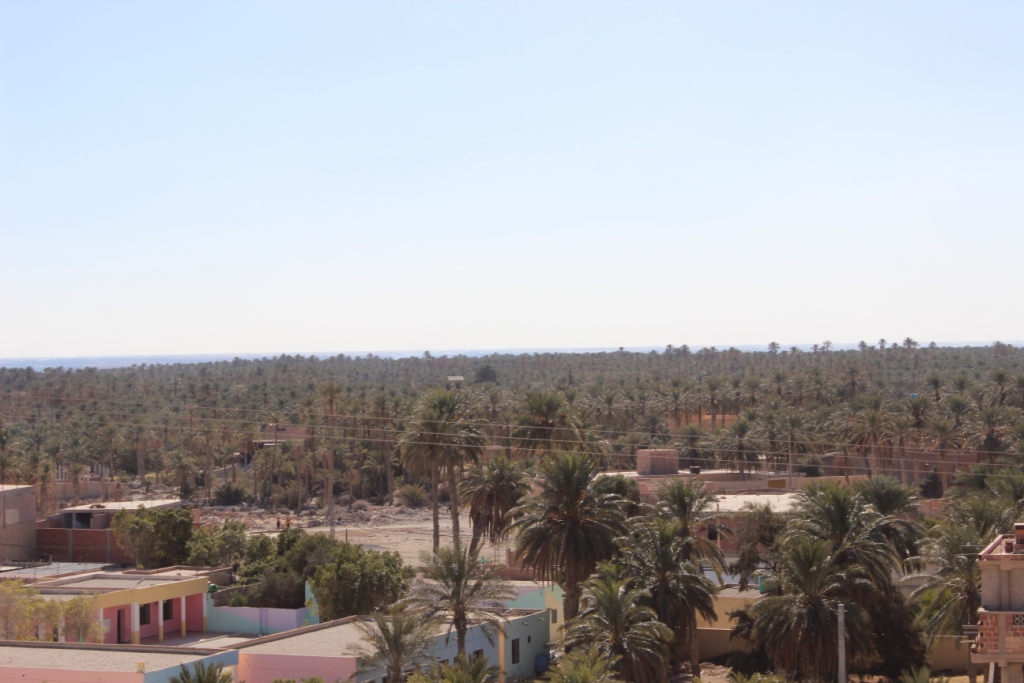
The Zab, whose plural form is Ziban, is a region located in the north-eastern part of the Algerian Sahara, at the foot of the Saharan Atlas. It is a predominantly plain region situated between the Ouled Naïl Mountains to the west and the Aurès Mountains to the east.
Today, the historical territory of the Zab extends across three principal wilayas: Biskra, El M’Ghair and Ouled Djellal.
The Zaatcha Resistance was one of the most prominent episodes of popular resistance in Algeria. It took place in the oasis of Zaatcha, in the Zab Dahraoui region, approximately 35 km southwest of the city of Biskra, particularly in the villages of Foughala, Farfar, Lichana and Bouchagroun.
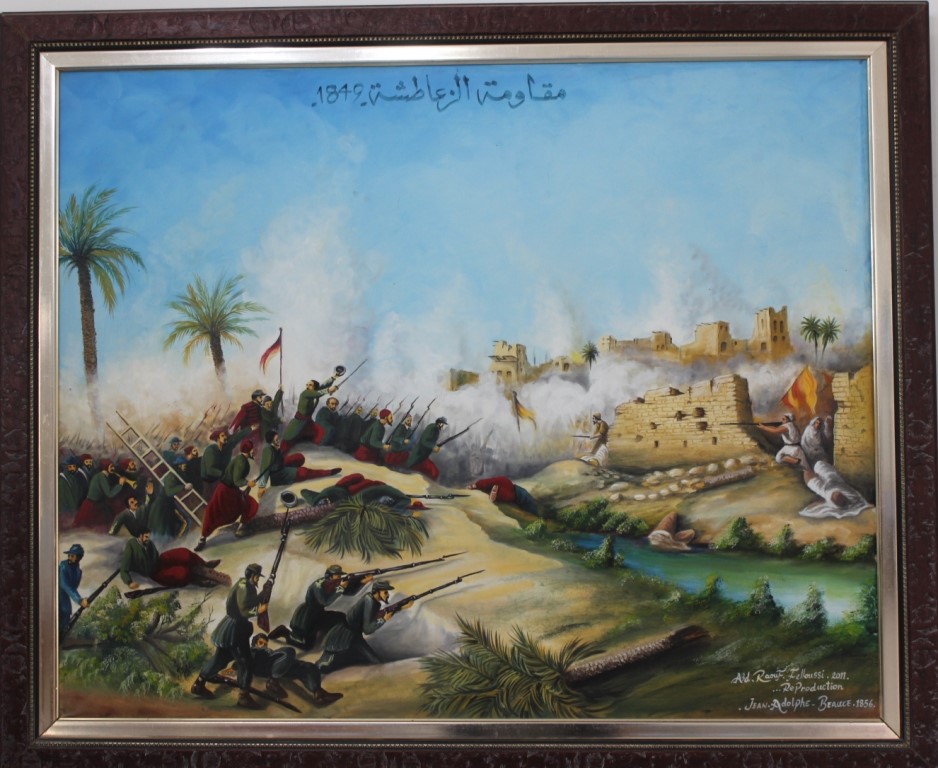
It was led by Sheikh Ahmed Bouziane, moqaddem of the Derqaouia Sufi brotherhood in the Zab Dahraoui region. The resistance lasted from 16 July to 26 November 1849.
Causes of the Resistance
Main Phases
1. The Phase of Strength
The first phase began with the arrival of French forces at the Zaatcha oasis on 16 July 1849, under the command of Colonel Carbuccia, who imposed a siege on the oasis in an attempt to suppress the resistance movement and eliminate its leader.
He was met by fierce resistance from the insurgents, who killed 37 soldiers and wounded at least 117 others. Carbuccia was consequently forced to withdraw with his troops.
This victory provided a significant moral boost to the resistance fighters and strengthened the momentum of resistance among the population of the region. Sheikh Abdelhafid El Khenagui, moqaddem of the Rahmania zawiya, supported his fellow resistance fighters in the Zaatcha oasis. Together, they confronted the French forces commanded by Saint-Germain in September 1849.
2. The Siege of the Oasis
General Herbillon proceeded to assemble his troops near Zaatcha. Their strength reached approximately 4,939 soldiers. He occupied the zawiya near Raboua and surrounded the crossroads leading to the Zaatcha oasis.
The orders called for the bombardment of the defensive walls in order to breach them. The resistance fighters, however, responded with great courage and forced the French forces to withdraw after inflicting losses of 35 soldiers, including an officer, as well as 147 wounded.
Despite the siege, Sheikh Bouziane succeeded in sending an envoy to the tribes of Bou Saâda and the Ouled Naïl to request assistance and support.
3. Retreat and Massacre
General Herbillon requested military reinforcements and received support from Constantine, Bou Saâda, Skikda and Annaba.
On 26 November 1849, the French forces attacked the oasis with an army of 8,000 soldiers, commanded by Colonels Carbuccia and Dumontet, Lafare, and Officer Barraille.
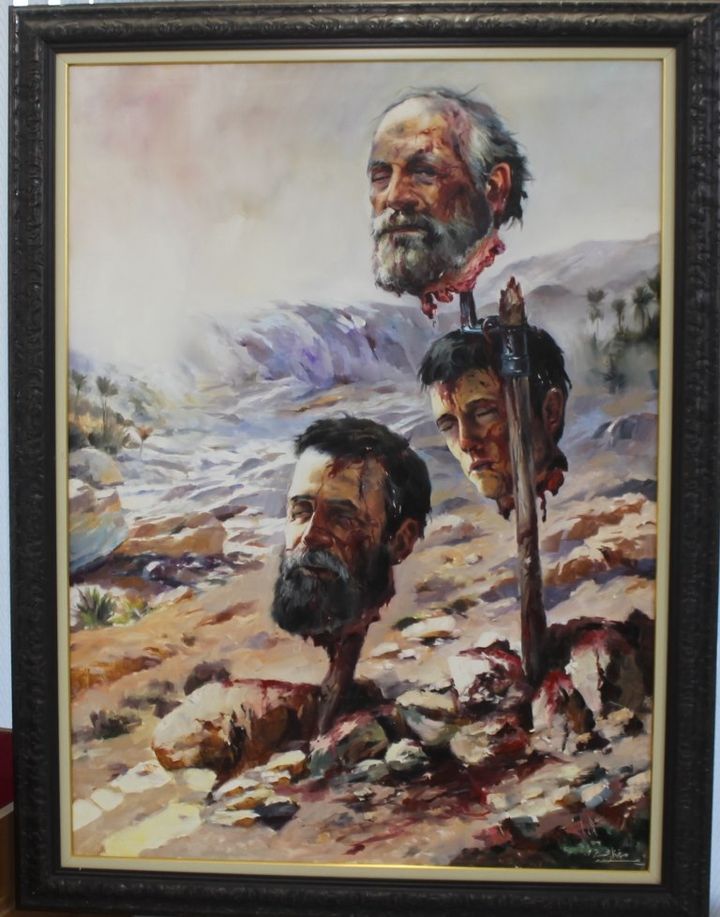
Without going into the military equipment deployed, the orders were to destroy the oasis and eliminate its inhabitants. The population resisted fiercely until many of them were killed. The house of Sheikh Bouziane was also bombarded until he fell on the field of honour.
Outcomes